
Life Insurance in Thousand Oaks, Built on the Fine Print
Our agency arranges term, whole and universal life policies, final expense plans and mortgage protection, along with retirement income planning, for clients in Thousand Oaks, Westlake Village and Moorpark. Price is one piece. The beneficiary designations, riders and conversion terms decide whether a policy still does its job two decades from now.
- Free quotes by phone
- Beneficiary lines double-checked
- Riders explained in writing
- Term matched to your debts
Life Insurance and Retirement Coverage We Set Up
Each policy type answers a different question. Term life pays only if death happens inside a fixed window, such as the years a mortgage is open or children are at home, which is why it carries the lowest cost per dollar of coverage. Whole life and universal life are permanent policies designed to last a lifetime, and both accumulate cash value, though they handle premium flexibility and growth by different rules. Final expense, mortgage protection and retirement income planning cover narrower gaps, and we show where each one fits before you pick.
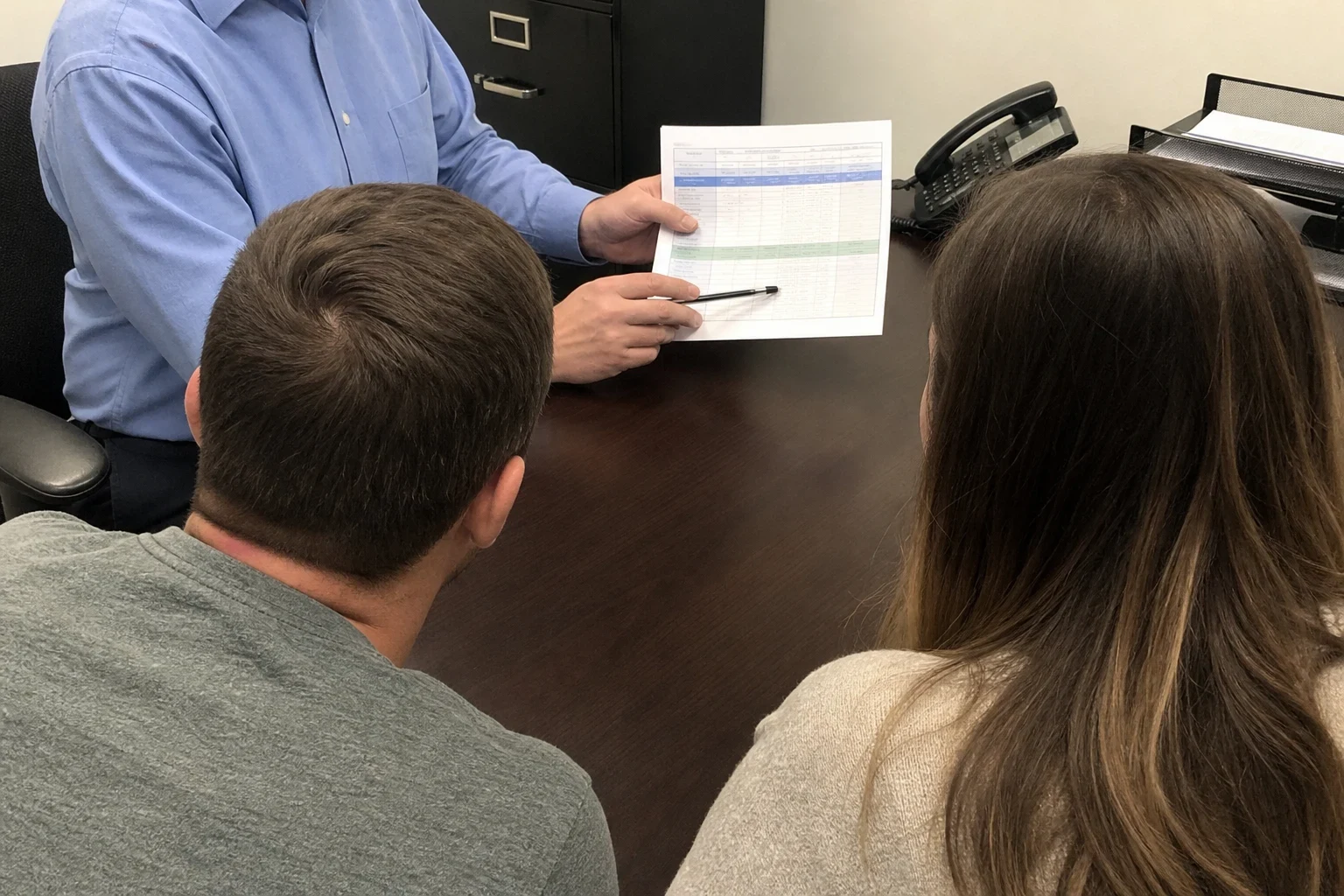
Term Life Insurance
Level-premium term coverage sized to your debts and working years, with conversion terms and beneficiary lines checked before you sign.

Retirement Income Planning
Annuities, pension elections and Social Security timing arranged so your essential bills are covered by income that keeps arriving.

Whole Life Insurance
Permanent coverage with a level premium and cash value, set up with the right dividend option, riders and beneficiary lines from the first day.

Mortgage Protection
Life coverage built around your mortgage balance and payoff year, so your family can keep making payments or retire the loan if you die before it is paid off.

Universal Life Insurance
Permanent coverage with adjustable premiums, designed and funded so the policy stays in force through your later years.

Final Expense Insurance
Small whole life policies sized to funeral and end-of-life costs, with the health questions, waiting period and beneficiary checked before you sign.
Why the Small Details Get Our Full Attention
Most policy problems do not show up at signing. They show up years later, when a beneficiary has changed, a term has run out or a rider was never added. We work through those details up front.
- 01
We read every beneficiary line
A primary beneficiary without a contingent behind it can send the money into probate. We confirm names, percentages and contingents, and we flag when a minor child is listed directly, since an insurer cannot pay a minor without a guardian or trust in place.
- 02
Term end dates tied to your calendar
We pick the term from the years that actually matter: when the mortgage is paid off, when your youngest finishes school, when you plan to stop working. A 20-year term that expires three years before the last mortgage payment leaves a gap that costs more to fill at an older age.
- 03
Conversion rights checked before you sign
Most term contracts carry a conversion privilege, which lets you switch to a permanent policy with no fresh health underwriting. That privilege expires at a stated age or policy anniversary. We show you exactly where the cutoff falls, so the option is still open if your health changes.
- 04
Riders explained by what they do
Waiver of premium, accelerated benefit and child riders each add cost. We describe what triggers each one and what it pays, so you only keep the ones that solve a real risk.
- 05
Options laid out in writing
You get the coverage amount, term, premium and riders for each option on paper, so you can compare them at your own pace.
Clients We Work With Around the Conejo Valley
We work with clients throughout Thousand Oaks, including Casa Conejo and Santa Rosa Valley. We also serve Westlake Village, Oak Park, Agoura Hills and Calabasas to the east, and Moorpark, Simi Valley and Camarillo to the north and west, along with Malibu.
- Thousand Oaks
- Westlake Village
- Santa Rosa Valley
- Casa Conejo
- Simi Valley
- Camarillo
- Moorpark
- Agoura Hills
- Oak Park
- Calabasas
- Malibu
Nearly every conversation can take place over the phone. When signing in person is simpler, we can come to your business.

How a Policy Comes Together
Four steps take you from a phone conversation to a signed, checked policy. Here is what happens at each one.
- 1
A conversation by phone
We talk through your family, income, mortgage balance, other debts and any coverage you already have through work. This takes about half an hour and tells us what problem the policy needs to solve.
- 2
Written options
We send you two or three options with the face amount, term, premium and riders listed side by side. We point out the trade-off in each one so the choice is yours.
- 3
Filling out the paperwork together
After you pick an option, we go through the insurer's forms with you one question at a time, so nothing gets answered from memory in a hurry. If a paramedical exam is required, the examiner can usually come to your business or another spot that works, and the carrier's underwriters take it from there.
- 4
Delivery review
When the policy is issued, we go through it with you before you sign the delivery receipt. We confirm the policy owner, the person covered, the beneficiaries and contingents, and we note the conversion deadline and free-look period.

About Life Insurance Thousand Oaks
Life Insurance Thousand Oaks helps people across the Conejo Valley choose coverage that fits and set it up so the paperwork holds. Our job is to make sure a policy pays out the way you expect when your family needs it.
We spend our time on the parts of a policy most people skim: the beneficiary form, the rider list, the conversion clause and the ownership line. Those are the details that decide whether a claim pays cleanly or turns into paperwork for the people you leave behind. If you already have a policy, we are glad to read it with you and tell you plainly whether it still fits.
What Sets the Price of a Life Insurance Policy
A premium is the insurer's estimate of risk spread across the life of the policy. A handful of factors move it, and some are within your control. Here is what we look at when we build your quote.
Your quote is free and comes after a phone conversation about your health, debts and goals. The final premium is set by the insurer once underwriting is complete, and we walk you through any change before you accept.
- Age at application
- Premiums are set by your age when the policy is issued, and for term and whole life they usually stay level from there. Applying a few years earlier can lock in a lower rate for the full term.
- Health and underwriting class
- Blood pressure, cholesterol, build, medications and family history place you in a rating class. The class you land in can change the premium more than any other single factor.
- Tobacco and nicotine use
- Insurers typically price cigarette, vape and cigar use as tobacco, and the difference is large. Some carriers treat occasional cigar use differently, which is worth asking about.
- How much coverage, for how long
- More coverage, or coverage that runs for more years, pushes the premium up. We size the face amount from your real debts and income needs rather than picking a round number.
- Policy type
- Term life covers a set window and costs the least. Whole life and universal life carry higher premiums, since they are built to stay in force for your entire lifetime and part of each payment funds a cash value account.
- Riders and exam route
- Each rider adds to the premium. Fully underwritten policies with a paramedical exam often price lower than simplified-issue policies that skip the exam.
Life Insurance Questions We Hear Most
- How much life insurance do I actually need?
- Start with what your income pays for. Total what would have to be paid off, such as the mortgage and car loans, then add the number of years your paycheck would need to keep the family running and any big costs still ahead, like college. Subtract savings and coverage you already carry. We work through those numbers with you by phone instead of using a flat multiple of salary.
- Should I choose term life or whole life?
- Term life fits needs that end, such as a mortgage or raising children, and costs much less per dollar of coverage. Whole life fits needs that last, such as final expenses or leaving money to heirs, and builds cash value. Many clients use term for the large temporary need and a smaller permanent policy for the rest.
- Is the life insurance through my employer enough?
- Group coverage is often a set multiple of salary, and it usually ends or becomes expensive to keep when you leave the job. It is a useful layer, but it is rarely sized to your actual debts. We look at it as part of the total, not the whole plan.
- Do I need a medical exam?
- Not always. Whether one is required comes down to how old you are, how much coverage you apply for and which kind of policy you choose. Larger fully underwritten policies often call for a short paramedical visit with blood work and measurements, and those usually price lower. Simplified-issue and final expense policies rely on health questions alone.
- What happens when my term policy ends?
- Coverage stops unless you renew at a much higher annual rate or convert it. Plenty of term contracts allow a switch to a permanent policy with no new underwriting, as long as you act before a stated age or anniversary. We write that deadline down for you when the policy is delivered.
- Can I name my children as beneficiaries?
- You can, but an insurer generally cannot pay a minor directly, so a court may need to appoint someone to manage the money. Naming a trust or a custodian is usually cleaner. We talk through the options and suggest you confirm the legal setup with an estate attorney.
- How does retirement income planning fit with life insurance?
- Some permanent policies and annuities can supply income or protect a spouse's income in retirement. We look at your pension, Social Security timing and savings to see where coverage helps and where it does not. Our retirement income planning page covers this in more detail.
Get Your Policy Details Right the First Time
Tell us what you need to protect, and we will lay out written options with every beneficiary, rider and term spelled out. The quote is free and starts with one conversation.